 Catalogue Shom
Bathymetry and Elevation
Type of resources
Available actions
Topics
Keywords
Contact for the resource
Provided by
Years
Formats
Representation types
Update frequencies
-
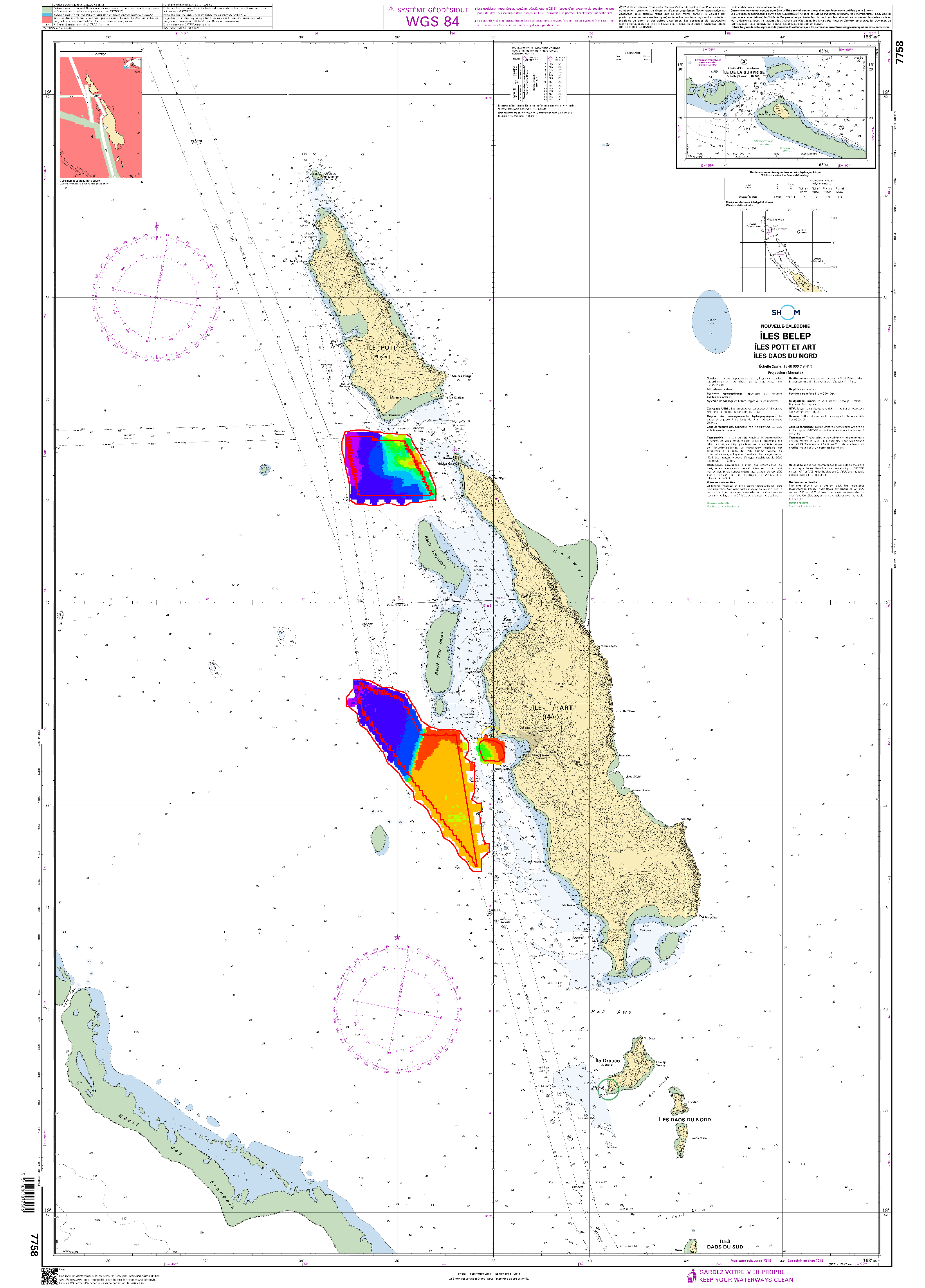
Bathymetric datasets are an extraction of surveys belonging to the Shom public database. For depth up to 50m, the vertical precision of soundings varies from 30cm to 1m and the horizontal precision varies from 1 to 20m. In deep ocean, the vertical precision is mainly around 1 or 2% of the bottom depth. It is sometimes more, it depends on the technology used. The data are referenced to ZH which is assimilated to LAT. Data are corrected for sound velocity variations. Data are acquired during the campaign S201603200 (http://dx.doi.org/10.17183/S201603200). // Instruments: sondeur monofaisceau simrad ea400 | sonal type cmax-cm2 // Number of soundings: 1427363
-
Bathymetric datasets are an extraction of surveys belonging to the Shom public database. For depth up to 50m, the vertical precision of soundings varies from 30cm to 1m and the horizontal precision varies from 1 to 20m. In deep ocean, the vertical precision is mainly around 1 or 2% of the bottom depth. It is sometimes more, it depends on the technology used. The data are referenced to ZH which is assimilated to LAT. Data are corrected for sound velocity variations. Data are acquired during the campaign S197802100 (http://dx.doi.org/10.17183/S197802100). // Instruments: sondeur deso 10 // Number of soundings: 2029
-
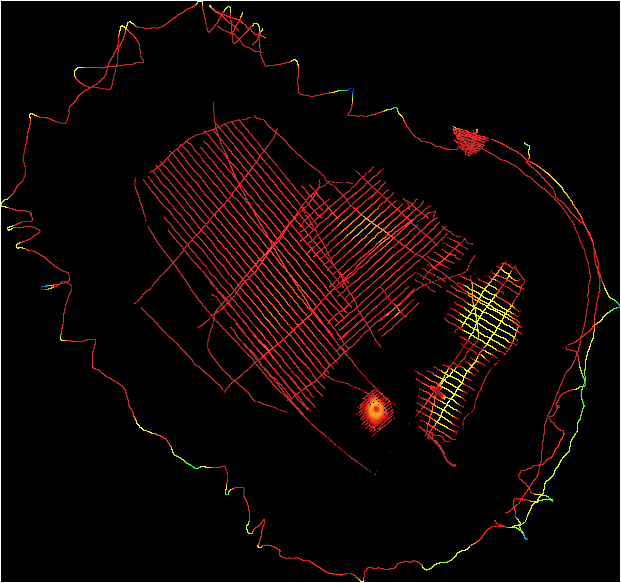
Bathymetric datasets are an extraction of surveys belonging to the Shom public database. For depth up to 50m, the vertical precision of soundings varies from 30cm to 1m and the horizontal precision varies from 1 to 20m. In deep ocean, the vertical precision is mainly around 1 or 2% of the bottom depth. It is sometimes more, it depends on the technology used. The data are referenced to ZH which is assimilated to LAT. Data are corrected for sound velocity variations. Data are acquired during the campaign S201500900 (http://dx.doi.org/10.17183/S201500900). // Instruments: sondeur monofaisceau simrad ea400 // Number of soundings: 454132
-

Bathymetric datasets are an extraction of surveys belonging to the Shom public database. For depth up to 50m, the vertical precision of soundings varies from 30cm to 1m and the horizontal precision varies from 1 to 20m. In deep ocean, the vertical precision is mainly around 1 or 2% of the bottom depth. It is sometimes more, it depends on the technology used. The data are referenced to ZH which is assimilated to LAT. Data are corrected for sound velocity variations. Data are acquired during the campaign S198803100 (http://dx.doi.org/10.17183/S198803100). // Instruments: sondeur deso 10 // Number of soundings: 4461
-
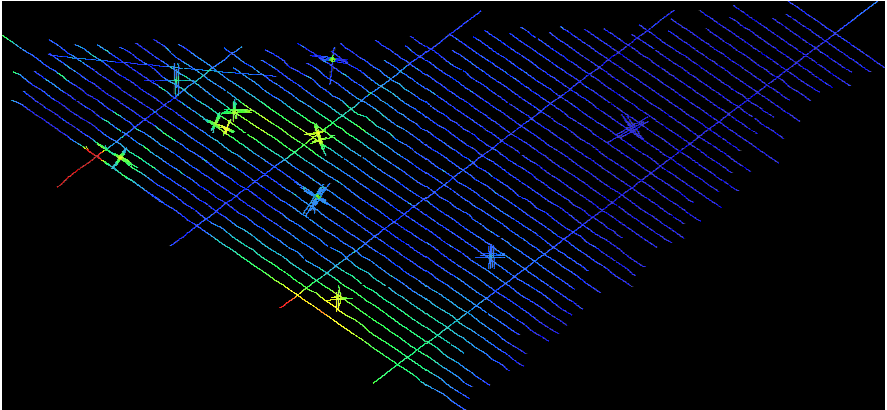
Bathymetric datasets are an extraction of surveys belonging to the Shom public database. For depth up to 50m, the vertical precision of soundings varies from 30cm to 1m and the horizontal precision varies from 1 to 20m. In deep ocean, the vertical precision is mainly around 1 or 2% of the bottom depth. It is sometimes more, it depends on the technology used. The data are referenced to ZH which is assimilated to LAT. Data are corrected for sound velocity variations. Data are acquired during the campaign S201601000 (http://dx.doi.org/10.17183/S201601000). // Instruments: sondeur monofaisceau simrad ea400 | sonal type cmax-cm2 // Number of soundings: 249743
-

Bathymetric datasets are an extraction of surveys belonging to the Shom public database. For depth up to 50m, the vertical precision of soundings varies from 30cm to 1m and the horizontal precision varies from 1 to 20m. In deep ocean, the vertical precision is mainly around 1 or 2% of the bottom depth. It is sometimes more, it depends on the technology used. The data are referenced to ZH which is assimilated to LAT. Data are corrected for sound velocity variations. Data are acquired during the campaign S200002500 (http://dx.doi.org/10.17183/S200002500). // Instruments: sondeur deso 20 | sondeur raytheon // Number of soundings: 30067
-
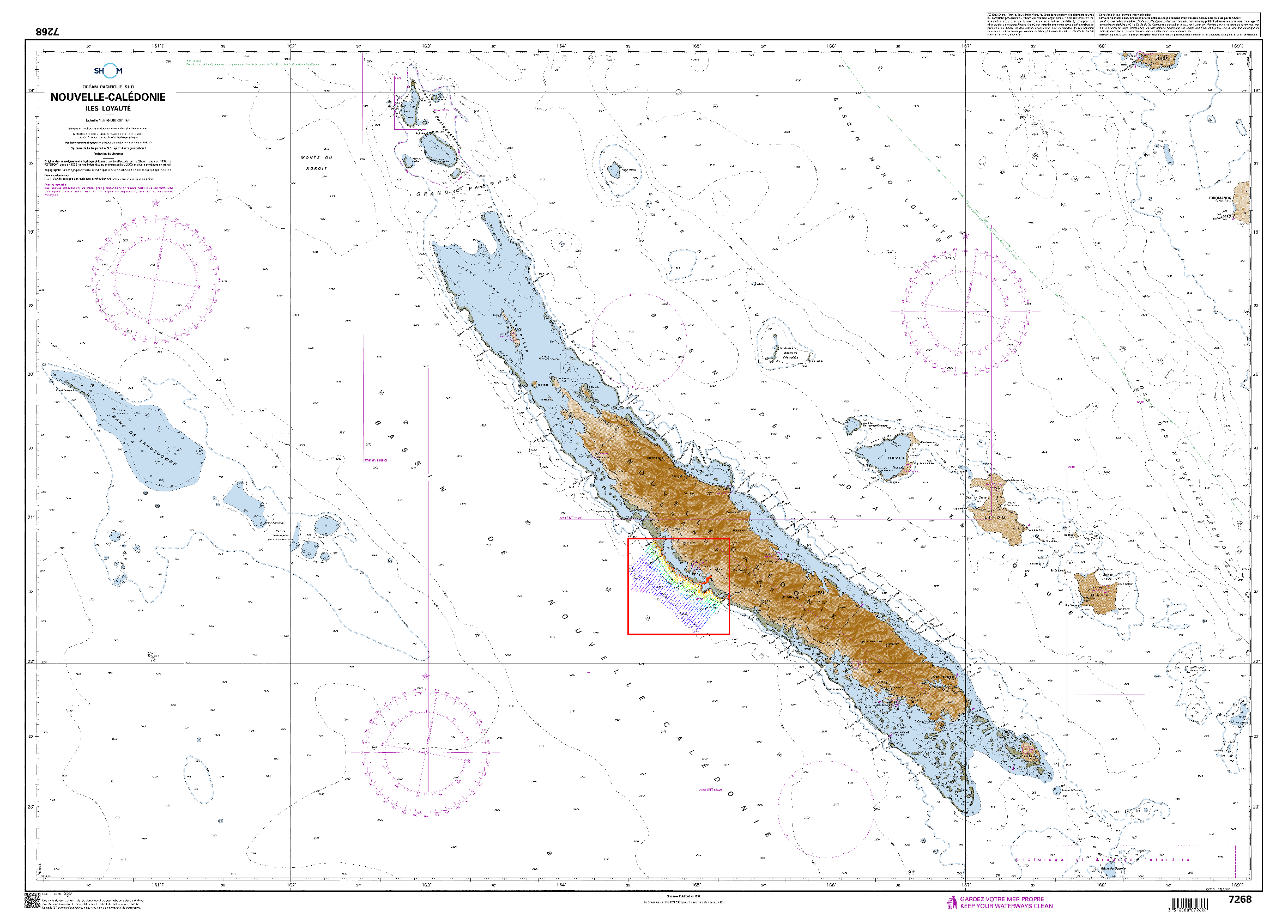
Bathymetric datasets are an extraction of surveys belonging to the Shom public database. For depth up to 50m, the vertical precision of soundings varies from 30cm to 1m and the horizontal precision varies from 1 to 20m. In deep ocean, the vertical precision is mainly around 1 or 2% of the bottom depth. It is sometimes more, it depends on the technology used. The data are referenced to ZH which is assimilated to LAT. Data are corrected for sound velocity variations. Data are acquired during the campaign S198803000 (http://dx.doi.org/10.17183/S198803000). // Instruments: sondeur deso 10 | sondeur lateral | sondeur raytheon | sondeur deso 20 // Number of soundings: 17342
-
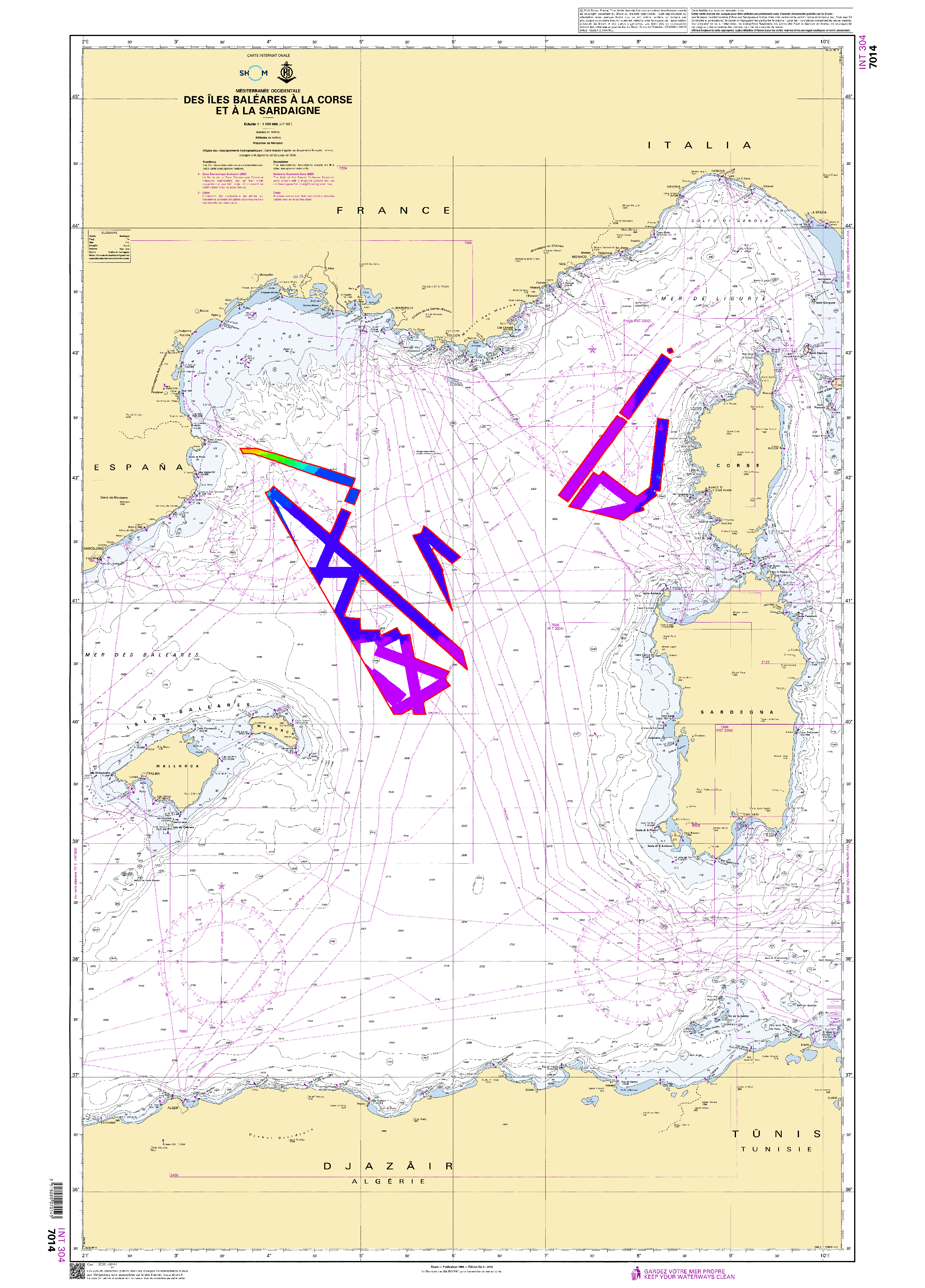
Bathymetric datasets are an extraction of surveys belonging to the Shom public database. For depth up to 50m, the vertical precision of soundings varies from 30cm to 1m and the horizontal precision varies from 1 to 20m. In deep ocean, the vertical precision is mainly around 1 or 2% of the bottom depth. It is sometimes more, it depends on the technology used. The data are referenced to ZH which is assimilated to LAT. Data are corrected for sound velocity variations. Data are acquired during the campaign S201700300 (http://dx.doi.org/10.17183/S201700300). // Instruments: sondeur multifaisceaux simrad em122 | sondeur multifaisceaux simrad em710 // Number of soundings: 778271
-
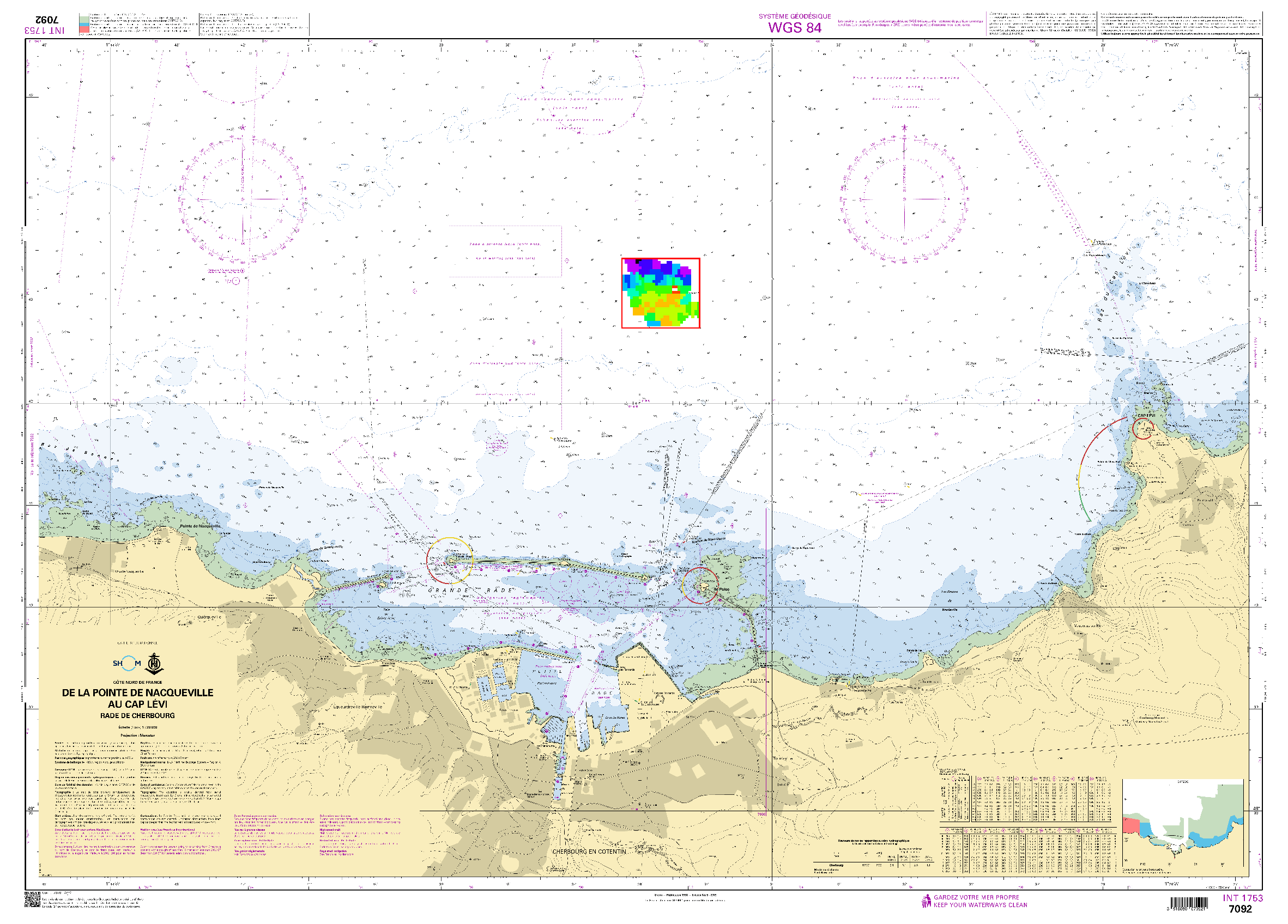
Bathymetric datasets are an extraction of surveys belonging to the Shom public database. For depth up to 50m, the vertical precision of soundings varies from 30cm to 1m and the horizontal precision varies from 1 to 20m. In deep ocean, the vertical precision is mainly around 1 or 2% of the bottom depth. It is sometimes more, it depends on the technology used. The data are referenced to ZH which is assimilated to LAT. Data are corrected for sound velocity variations. Data are acquired during the campaign S193500700 (http://dx.doi.org/10.17183/S193500700). // Instruments: plomb poisson // Number of soundings: 602
-
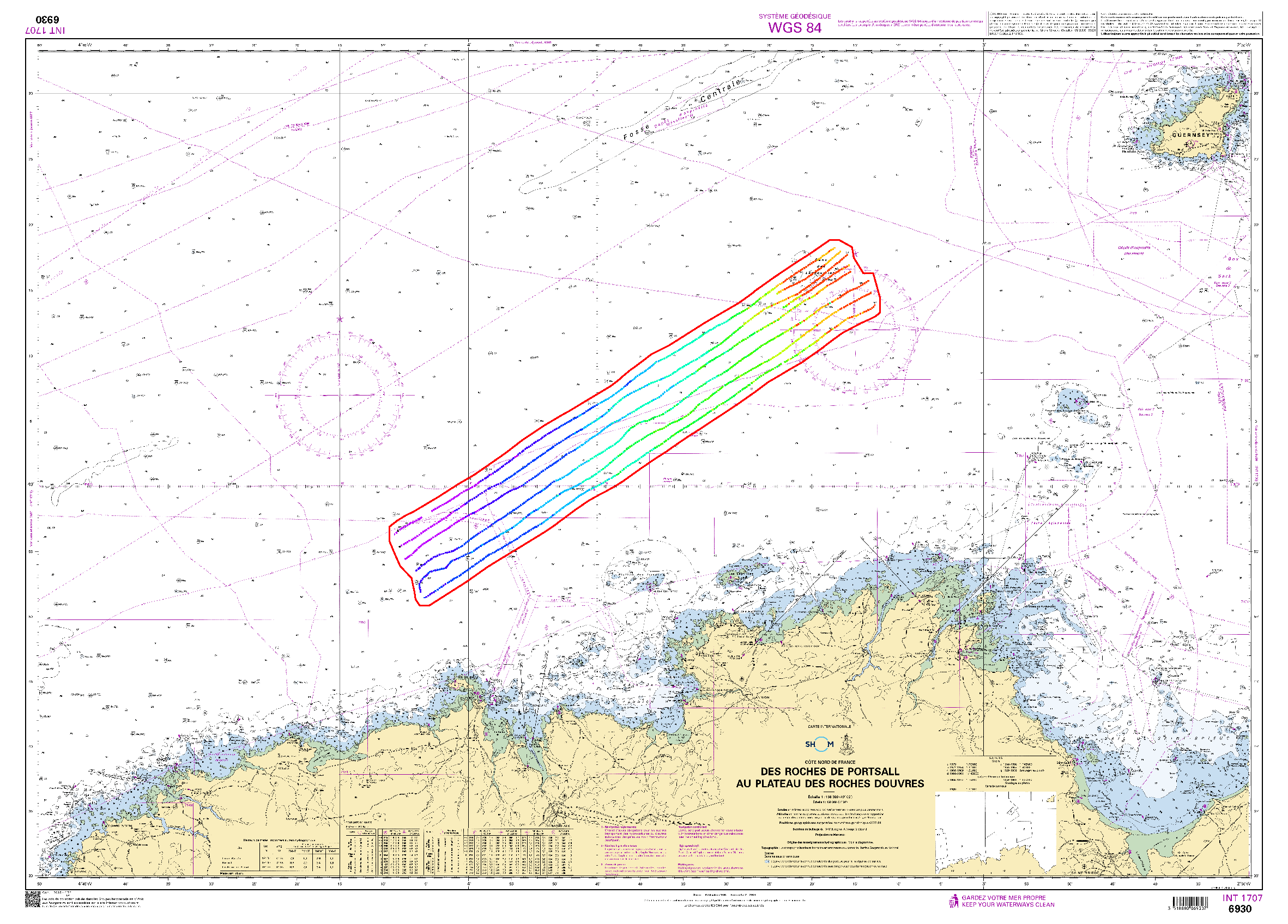
Bathymetric datasets are an extraction of surveys belonging to the Shom public database. For depth up to 50m, the vertical precision of soundings varies from 30cm to 1m and the horizontal precision varies from 1 to 20m. In deep ocean, the vertical precision is mainly around 1 or 2% of the bottom depth. It is sometimes more, it depends on the technology used. The data are referenced to ZH which is assimilated to LAT. Data are corrected for sound velocity variations. Data are acquired during the campaign S195600500 (http://dx.doi.org/10.17183/S195600500). // Instruments: sondeur kelvin-hughes // Number of soundings: 1633